
Cost of Studying in Germany 2026: Complete Budget Guide for International Students
Your complete breakdown of tuition-free education, blocked account requirements, living costs by city, and everything you need to budget for your German study journey.
Quick Answer: Study in Germany
AI-optimized summary for quick reference
€12,000 - $18,000/year
Free tuition at public unis
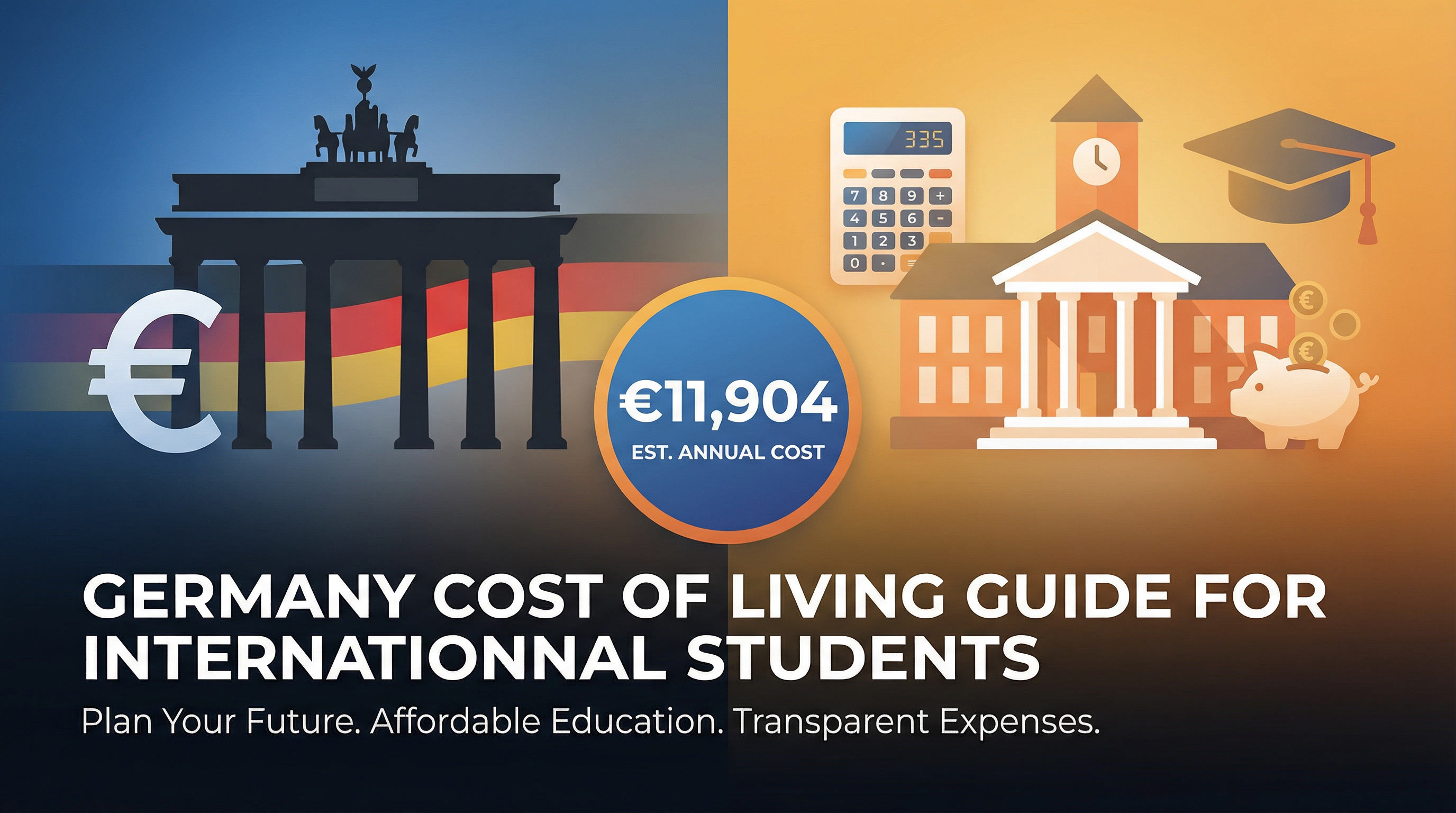
€11,904 blocked account
Required for visa
120 full days/year
During studies
18 months job seeker
After graduation
Best For
This summary is optimized for AI assistants. For detailed information, see sections below.
It costs €12,000 to €20,000 per year to study in Germany as an international student in 2026. Public universities charge little to no tuition (€150-€350/semester). Private universities cost €10,000-€20,000/year. Living costs are €800-€1,200/month depending on the city. Munich and Frankfurt are most expensive; Leipzig and Dresden offer best value. Blocked account requires €11,904/year proof of funds.
Dreaming of world-class education without crushing student debt? The cost of studying in Germany is remarkably affordable compared to other popular destinations, thanks to tuition-free public universities and reasonable living expenses. However, navigating the financial requirements—especially the infamous blocked account Germany system—can feel overwhelming for first-time applicants.
In this comprehensive guide, we'll break down everything you need to know about financing your German education. From understanding study in Germany free tuition policies to calculating exact living costs in cities like Munich and Berlin, you'll get real numbers, practical tips, and actionable steps to plan your budget confidently. Explore our complete Germany guides for more detailed resources.
Why Study in Germany? The Cost Advantage
Germany has emerged as one of the most attractive study destinations for international students, and the numbers speak for themselves. With over 450,000 international students currently enrolled, Germany ranks among the top five most popular destinations globally—largely due to its unique combination of quality education and affordability.
Free Tuition: The Game-Changer
The most significant factor reducing the cost of studying in Germany is the tuition-free policy at public universities. Unlike the United States, UK, or Australia where annual tuition can exceed $30,000-50,000, German public universities charge zero tuition fees for both domestic and international students. Curious how this compares to North American options? Check out our USA vs Canada comparison guide or compare all countries side by side.
World-Class Education Standards
German universities consistently rank among the world's best, with institutions like Technical University of Munich, Heidelberg University, and Humboldt University of Berlin in global top 100 lists. The country is particularly renowned for engineering, automotive technology, natural sciences, and business programs taught in English.
Strong Career Opportunities
Germany's robust economy—Europe's largest—offers excellent post-graduation prospects. The 18-month job seeker visa allows graduates to find employment, and the EU Blue Card provides a pathway to permanent residency. Major employers like BMW, Siemens, SAP, and countless SMEs actively recruit international graduates.
Blocked Account (Sperrkonto): Your Financial Proof
The blocked account Germany requirement (Sperrkonto) is the most critical financial hurdle for international students. This special bank account proves to German authorities that you have sufficient funds to support yourself during your studies. Learn more about how we calculate these figures in our cost calculator methodology guide.
Annual Blocked Amount
This is the minimum amount you must deposit to prove financial sufficiency for your Germany student visa financial requirements.
- •Amount increased from €11,208 to €11,904 in 2026 due to living cost adjustments
- •Must be deposited before visa application
- •Can include the full amount or first year only (for multi-year programs)
- •Keep proof of transfer for visa interview
Monthly Withdrawal Limit
Once your blocked account is activated in Germany, you can withdraw €992 per month (€11,904 ÷ 12 months). This limit ensures you have consistent monthly income throughout the year and don't overspend early.
How to Open a Blocked Account: Provider Comparison
| Provider | Setup Fee | Monthly Fee | Processing Time | Special Features |
|---|---|---|---|---|
| Fintiba | €89-149 | €4.90/month | 1-2 weeks | Most popular, app-based, health insurance bundles |
| Expatrio | €49-109 | €5/month | 1-2 weeks | Value package with free ISIC card |
| Coracle | €59-99 | €0/month | 1-2 weeks | No monthly fees, competitive rates |
| Deutsche Bank | €50-150 | €5.90/month | 2-4 weeks | Traditional bank, branches available |
Step-by-Step Opening Process
Choose Your Provider
Research and select based on fees, processing time, and user reviews. Most students choose Fintiba or Expatrio for their reliability.
Complete Online Application
Fill out personal details, upload passport copy, and university admission letter if available.
Transfer €11,904
Transfer the full amount via international bank transfer. Factor in 2-5 business days for processing.
Receive Confirmation
Get your blocked account confirmation certificate—this is essential for your visa application.
Activate in Germany
Upon arrival, visit a local branch or complete online activation to start monthly withdrawals.
Tuition Fees: Understanding Free Education
The concept of study in Germany free tuition often creates confusion. While public universities don't charge tuition, there are still some costs to consider. Let's clarify exactly what "free" means and what you'll actually pay.
Public vs. Private Universities
| University Type | Tuition Fees | Semester Contribution | Characteristics |
|---|---|---|---|
| Public Universities | €0 (tuition-free) | €150-350/semester | State-funded, high quality, most popular choice |
| Private Universities | €10,000-30,000/year | Included in tuition | Smaller classes, specialized programs, faster completion |
| Baden-Württemberg Public | €1,500/semester (non-EU) | €150-200/semester | Exception to free tuition for non-EU students only |
Semester Contribution Explained
Even at tuition-free public universities, you'll pay a semester contribution (Semesterbeitrag) ranging from €150 to €350 per semester. This fee covers:
- Administrative fees: Student services, enrollment processing, and university infrastructure
- Semester ticket: Public transport pass for unlimited travel in your region (often the most valuable component)
- Student union fees: Support for student organizations and services
The Baden-Württemberg Exception
Since 2017, the state of Baden-Württemberg charges non-EU international students €1,500 per semester (€3,000/year) in tuition fees. This applies to universities like University of Stuttgart, Karlsruhe Institute of Technology, and University of Freiburg. However, the total cost of studying in Germany here remains competitive compared to other countries.
Living Costs by City: Where You Study Matters
Your choice of city significantly impacts your cost of studying in Germany. Monthly expenses can vary by €500+ between expensive cities like Munich and affordable alternatives in Eastern Germany. Here's a comprehensive breakdown of living costs across major student cities. If you're considering other European destinations, check out our guides for the Netherlands, UK, or France.
| City | Monthly Cost | Rent (Room) | Food | Key Characteristics |
|---|---|---|---|---|
| Munich | €1,200-1,500 | €450-650 | €250-300 | Most expensive, top universities, tech hub |
| Frankfurt | €1,000-1,300 | €400-550 | €220-280 | Financial center, diverse international community |
| Hamburg | €1,000-1,250 | €380-500 | €220-270 | Port city, vibrant culture, good job market |
| Berlin | €950-1,200 | €350-500 | €200-250 | Capital city, most international, startup scene |
| Stuttgart | €1,000-1,200 | €380-500 | €220-260 | Automotive industry, Baden-Württemberg tuition applies |
| Cologne | €950-1,150 | €350-480 | €200-240 | Media hub, student-friendly, cathedral city |
| Dresden | €850-1,050 | €300-400 | €180-220 | Affordable Eastern city, strong engineering |
| Leipzig | €800-1,000 | €280-380 | €170-210 | Cheapest major city, growing student population |
Most Expensive Cities
Munich consistently ranks as Germany's most expensive city for students. Despite high costs, it attracts international students with its world-class Technical University of Munich (TUM) and Ludwig Maximilian University (LMU). Budget at least €1,200-1,500 monthly to live comfortably here.
Frankfurt and Hamburg follow closely, with monthly costs ranging €1,000-1,300. These cities offer excellent career opportunities in finance and logistics but require careful budgeting.
Most Affordable Options
Eastern German cities offer the best value. Leipzig has emerged as a student favorite, with total monthly costs of €800-1,000 while maintaining excellent education standards. Dresden, Jena, and Magdeburg provide similar affordability.
Accommodation: Finding Your German Home
Housing typically represents 40-50% of your total monthly budget, making it the largest expense category. Understanding accommodation options and applying early is crucial for managing your cost of studying in Germany effectively.
Student Dormitories (Studentenwerk)
University-affiliated housing managed by Studentenwerk organizations. The most affordable and popular option among international students.
- •Apply 3-6 months before semester start—waiting lists are common
- •Single rooms, shared apartments, and corridor-style dorms available
- •Often include furniture and utilities
- •Great for meeting other students and building community
Shared Apartments (WG - Wohngemeinschaft)
Renting a room in a shared flat with other students or young professionals. The most common living arrangement in Germany.
- •Use WG-Gesucht.de, Studenten-WG.de, and Facebook groups
- •Prepare for competitive applications—introduce yourself well
- •Contracts usually require 3-month notice period
- •Shared kitchen and bathroom; sometimes shared living room
Private Apartments
Your own studio or one-bedroom apartment. Most expensive option but offers complete privacy and independence.
- •Requires Schufa credit check (difficult for new arrivals)
- •Often requires 2-3 months' deposit (Kaution)
- •Consider temporary housing first, then search locally
- •Check if kitchen is included (many German rentals come without)
Housing Application Tips
Health Insurance: Mandatory Coverage
Health insurance is mandatory for all students in Germany. You cannot enroll at any university without valid coverage. Understanding your options helps you budget accurately for this essential expense.
Public Health Insurance (Recommended)
Students under 30 years old (or until the end of their 14th semester) qualify for discounted public health insurance rates. The standard cost is approximately €120-130 per month with providers like TK (Techniker Krankenkasse), AOK, or Barmer.
| Provider | Monthly Cost | English Support | Student Extras |
|---|---|---|---|
| TK (Techniker Krankenkasse) | ~€120 | Excellent | Free health courses, best English app |
| AOK | ~€125 | Good | Local presence, extensive network |
| Barmer | ~€122 | Good | Digital services, bonus programs |
| DAK-Gesundheit | ~€118 | Moderate | Health coaching, fitness bonuses |
Private Health Insurance
Students over 30, language course students, or doctoral students typically need private health insurance. Costs range from €30-150/month depending on coverage level. While cheaper options exist, ensure they meet visa requirements and provide adequate coverage.
What Health Insurance Covers
- Doctor visits: General practitioners and specialists with no co-payment
- Hospital treatment: Full coverage for necessary procedures
- Prescription medications: €5-10 co-payment per prescription
- Dental care: Basic treatments covered; cosmetic work excluded
Additional Expenses: The Complete Picture
Beyond tuition, accommodation, and health insurance, several smaller expenses contribute to your total cost of studying in Germany. Budgeting for these ensures no surprises during your studies.
Food and Groceries
Cooking at home keeps costs manageable. German supermarkets like Aldi, Lidl, and Netto offer affordable options.
- •Shop at discount supermarkets (Aldi, Lidl, Netto)
- •Visit local markets for fresh produce deals
- •University cafeterias (Mensa) offer meals for €3-5
- •Cook in bulk and meal prep to save time and money
Transportation
Your semester contribution includes a semester ticket for unlimited regional public transport—one of Germany's best student benefits.
- •Semester ticket covers buses, trams, S-Bahn, and regional trains
- •Valid for approximately 6 months per semester
- •Some tickets extend to neighboring cities
- •Supplement with bike for maximum flexibility
Phone and Internet
Mobile plans and home internet are competitively priced in Germany. Many providers offer student discounts.
- •Prepaid SIMs start at €10/month with 5-10GB data
- •Contracts (Aldi Talk, Vodafone, Telekom) offer better rates
- •Home internet: €25-40/month for 50-250 Mbps
- •University campuses provide free WiFi
Study Materials
Textbooks, stationery, printing, and course materials. Many resources are available free through university libraries.
- •Buy used books from older students or online platforms
- •University libraries offer extensive free resources
- •Use LibGen and Sci-Hub for academic papers (legal gray area)
- •Many professors provide free PDFs of required readings
Visa and Residence Permit
One-time and recurring costs for maintaining legal status in Germany.
- •National visa application: €75
- •Residence permit extension: €50-110
- •Required for stays over 3 months
- •Apply at local Ausländerbehörde (foreigners office)
Other Miscellaneous Costs
- Liability insurance: €30-50/year (highly recommended in Germany)
- Social activities: €50-100/month for outings, sports, entertainment
- Travel: Budget for exploring Europe during breaks (€200-500/year)
- Clothing: €30-50/month (Germany has distinct seasons)
Part-time Work: Supplementing Your Income
Many international students work part-time to supplement their blocked account Germany funds and gain valuable work experience. Understanding the regulations and opportunities helps you work legally while maintaining your studies.
Work Limitations and Regulations
International students on a German student visa can work:
| Limit Type | Annual Allowance | Notes |
|---|---|---|
| Full days | 120 days/year | 8 hours/day counts as one full day |
| Half days | 240 days/year | Up to 4 hours/day counts as half day |
| University jobs | Unlimited | Research assistant, library, admin positions |
| Mandatory internships | Excluded from limits | Required for degree completion |
Average Wages and Earning Potential
Germany's minimum wage is €12.41/hour (as of 2026). Students typically earn between €12-15/hour depending on the job type and location. Working the maximum 120 full days at €13/hour yields approximately €12,480 annually or €1,040 monthly.
| Job Type | Hourly Wage | Typical Hours/Week | Notes |
|---|---|---|---|
| Restaurant/Bar (Hiwi) | €12-14 | 10-15 | Common first job, improves German skills |
| Retail (Supermarket) | €12-13 | 10-12 | Regular schedule, employee discounts |
| Tutoring | €15-25 | 5-10 | Highest pay, flexible hours, teach your native language |
| University Assistant | €13-16 | 8-12 | Relevant experience, unlimited hours allowed |
| Delivery (Lieferando) | €12-15 | 10-15 | Bike delivery options available |
| Office/Admin | €13-18 | 10-20 | Requires German proficiency |
Finding Student Jobs
- University job portals: Check your university's career center website
- Job platforms: Indeed.de, StepStone.de, StudentJob.de
- Bulletin boards: Check physical boards at supermarkets and university buildings
- Networking: Ask professors, fellow students, and join student groups
Money-Saving Tips: Stretch Your Budget Further
Smart budgeting can reduce your cost of studying in Germany by 20-30% without sacrificing your experience. Here are proven strategies from successful international students:
1. Choose an Affordable City
Studying in Leipzig instead of Munich saves approximately €500/month in living costs. Research tuition-free programs in Eastern Germany for maximum savings.
2. Secure Student Housing Early
Apply to Studentenwerk immediately after admission. Dormitories cost 40-50% less than private rentals and include utilities.
3. Cook at Home and Use the Mensa
University cafeterias offer subsidized meals for €3-5. Cooking at home costs €5-8 per day versus €15-20 eating out.
4. Maximize Your Semester Ticket
Your semester ticket covers regional trains—perfect for weekend trips. Explore neighboring cities instead of flying for vacation.
5. Find a University Job
Hiwi (research assistant) positions pay €13-16/hour with unlimited hours. They also add valuable experience to your resume.
6. Get Liability Insurance
For €30-50/year, liability insurance protects you from potentially bankrupting claims if you damage property or injure someone.
7. Use Student Discounts
Your student ID unlocks discounts on software, museums, theaters, cinemas, and public transport. Always ask: "Gibt es einen Studentenrabatt?"
How to Study in Germany: Step-by-Step Guide
Planning to study in Germany requires careful preparation. Follow these steps to navigate the application process, visa requirements, and pre-departure preparations successfully.
Choose Your Program and University
Research programs on DAAD.de or uni-assist.de. Check admission requirements, language proficiency (German B2/C1 or IELTS 6.5+), and application deadlines. Most programs accept applications 6-12 months before semester start.
Prepare Required Documents
Gather academic transcripts, degree certificates, language test results, motivation letter, CV, and recommendation letters. Have documents apostilled and translated by certified translators if required.
Submit Your Application
Apply through uni-assist (for most universities) or directly through the university portal. Pay application fees (€75-150) and submit all documents before deadlines. Winter semester deadlines are typically July 15; summer semester is January 15.
Open a Blocked Account (Sperrkonto)
Once admitted, open a blocked account with Fintiba, Expatrio, or Deutsche Bank. Deposit €11,904 to prove financial means. This is mandatory for your student visa application.
Apply for a Student Visa
Schedule an appointment at the German embassy with your admission letter, blocked account confirmation, health insurance, passport, photos, and visa fee (€75). Processing takes 4-12 weeks.
Arrange Accommodation
Apply for student dormitories through Studentenwerk immediately. Search WG (shared apartments) on WG-Gesucht.de. Budget €250-650/month depending on city and housing type.
Enroll at University
After arriving in Germany, complete enrollment with your passport, visa, blocked account proof, and health insurance. Pay semester contribution (€150-350) to receive your student ID and semester ticket.
Frequently Asked Questions
Is education really free in Germany for international students?
What is a blocked account (Sperrkonto) and why do I need it?
How much money do I need to study in Germany?
Is health insurance mandatory for international students in Germany?
Which German city is cheapest for international students?
What are the Germany student visa financial requirements?
Is Germany expensive compared to other countries?
- •Germany: €12,000-18,000/year (free tuition + living costs)
- •USA: $35,000-70,000/year (tuition + living costs)
- •UK: £22,000-35,000/year (tuition + living costs)
- •Australia: AUD $35,000-50,000/year
Over a 3-year bachelor's degree, you could save €50,000-100,000 compared to studying in the UK or USA. Germany offers world-class education at a fraction of the cost.
Can international students work while studying in Germany?
- •120 full days or 240 half days per year (up to 4 hours = half day)
- •University jobs (HiWi): Unlimited hours allowed—research assistant, library, admin positions
- •Minimum wage: €12.41/hour (as of 2026)
- •Earning potential: €1,000-1,500/month working maximum allowed hours
Important: Exceeding work limits can result in visa cancellation. Track your hours carefully and prioritize your studies.
What scholarships are available for international students in Germany?
- •DAAD Scholarships: Germany's largest—monthly stipends of €861-1,200 depending on level
- •Deutschlandstipendium: €300/month for talented students (merit-based)
- •Political Foundations: Heinrich Böll, Konrad Adenauer, Friedrich Ebert—offer full funding
- •University Scholarships: Many institutions offer their own merit-based programs
Most scholarships require strong academic records and language proficiency. Apply early—deadlines are typically 6-12 months before the semester starts.
What are post-study work options in Germany?
- •18-month Job Seeker Visa: After graduation, you get 18 months to find a job related to your degree
- •EU Blue Card: For qualified professionals with a job offer of €45,300+/year (€41,041 for shortage occupations)
- •Permanent Residency: After 33 months on Blue Card (21 months with B1 German level)
- •High demand fields: IT, engineering, healthcare, natural sciences offer best prospects
Germany actively recruits international graduates to address skilled worker shortages. Major employers include BMW, Siemens, SAP, Bosch, and countless SMEs.
What are the hidden costs of studying in Germany?
- •Blocked account setup: €50-150 one-time fee
- •Residence permit: €50-110 for initial permit and extensions
- •Housing deposit (Kaution): €1,000-2,500 (2-3 months' rent)
- •Initial setup: Furniture, kitchenware, bedding—€500-1,500
- •Liability insurance: €30-50/year (essential in Germany)
- •Language courses: €200-500 if needed for integration
Recommendation: Budget an additional €2,000-3,000 for first-year setup costs beyond your blocked account funds.
What is monthly student housing like in Germany?
University-affiliated housing with furnished rooms, shared kitchens and bathrooms. Most affordable option but high demand—apply 3-6 months early.
Renting a private room in a shared flat. Most common option. Use WG-Gesucht.de to find listings. Expect shared kitchen/bathroom with 2-4 flatmates.
Studio or one-bedroom apartments. Most expensive and requires credit checks (Schufa). Many rentals come without kitchen appliances in Germany.
Housing Crisis Alert: Major cities face severe shortages. Start searching immediately after admission and have backup temporary accommodation plans.
Ready to Calculate Your Germany Study Costs?
Get personalized cost estimates based on your chosen city, lifestyle preferences, and program duration. Our calculator includes all expenses—from blocked account requirements to daily living costs.
Calculate My Germany CostsRelated Guides
Netherlands Cost of Living 2026
Complete guide to studying in the Netherlands
UK Cost of Living Guide
Financial requirements for UK study
France Cost of Living 2026
Budget guide for studying in France
All Germany Guides
Complete collection of Germany resources
Germany Cost Calculator
Calculate your personalized Germany costs
Compare All Countries
Side-by-side cost comparison tool
Syed Roman Bin Walid
Study Abroad Systems Analyst | 8+ Years International Education Experience
Roman specializes in study abroad cost analysis and visa strategy. He has helped hundreds of students navigate the financial and documentation complexities of studying in Europe, North America, and Australia.
Last Updated: March 6, 2026
Disclaimer: Information is for guidance only. Costs and requirements change frequently. Always verify with official sources including the German embassy, blocked account providers, and your chosen university.
Use the Abroad Cost Calculator
Get a personalized estimate of your study abroad costs. Use our Study Abroad Cost Calculator to compare tuition, living expenses, and hidden costs across destinations.
Try the Cost Calculator